
How do we infuse freshness into this process if at all?
It’s a problem and how!
This topic is an offshoot of my previous article where I talk about a few delicate nuances around designing workflows and how it sometimes becomes a battle – between making work flow or prioritizing work over flow. And how the concept of biases could come in.
This article focuses on highlighting one of the most prominent biases and a take on how this affects creativity and novelty.
Design thinking is a powerful instrument that we usually throw at something, when we want to reinvent, or transform, or innovate, likely in that order.
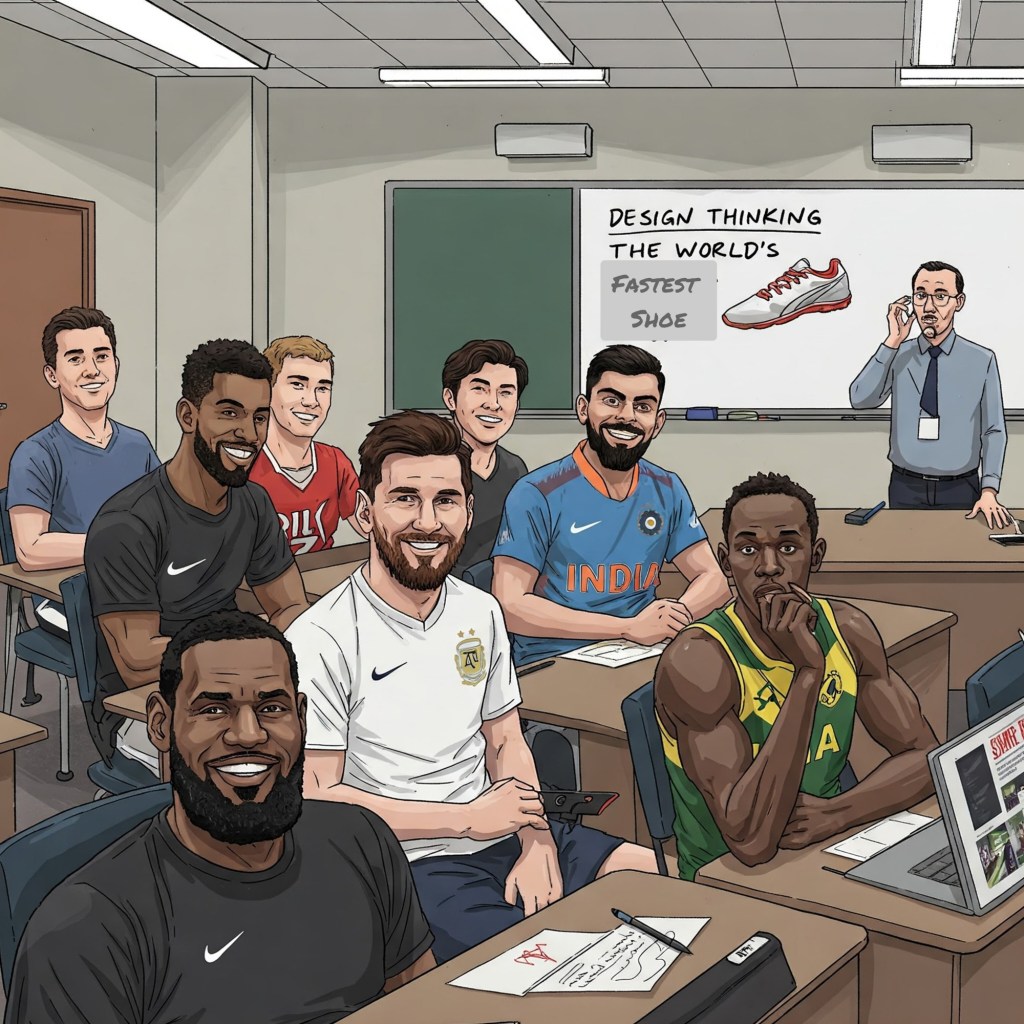
It is important to understand and acknowledge the “typecast” urge that creeps in during the process, which could alter the outcome or impact the quality of the outcome if not checked.
One important question to ask is:
How do you break the inherent have-dun-it-before-duh bias, thereby allowing due opportunity for creativity?
Now that’s probably going overboard, but the underlying tone is important.
This is where practitioners need to check their “going in hot” behavior^, knowing fully well about the (possibility of) existence of such a bias.
A classic example would be the persona of a web user, and us attaching the word “typical” to how this persona behaves. A typical user does this….a typical user does that etc..
This modus operandi usually feeds the bias I am talking about.
So how can we navigate this?
I say take it head-on!
I would recommend starting your design thinking approach with the context of identifying all known biases specific to the problem statement.
Among those, you will find some are valid, some are to watch out for, and a few that are debatable / can be re-imagined ..
Also ask yourself, what is “atypical” here?
By doing this, not only will you challenge the status quo mindset, but it will also encourage the design process to be more creative.
While Design thinking has many frameworks / models and lays (rightly so) a strong focus on putting oneself in the User’s shoes, I would recommend stepping out of such shoes once in a while and looking at it renewed, with our biases in mind..
If need be, an anti design thinking bias? 😁
What say?
p.s: An amazing, amazing TEDx talk by my friend Kranti M, who provides a refreshing take on the whole design thinking process and how to up the game…it is a must watch for all you Designers out there, and can be viewed here
Pic description: The picture shows a classroom like setting with popular sports people LeBron James, Messi, Virat Kohli and Usain Bolt in their sports jerseys and smiling, while the instructor seems confused and the text – “Design Thinking : The world’s fastest shoe” is written on the board. This picture was generated using Google Gemini.
^ this behavior stems from our affinity to earlier problem statements and interactions, and when we subconsciously start carrying the same process and thoughts during our design.
 Random Musings